
A millimetre. A pulse. The position of a thumb.
They sound like tiny details… but in Toyohari acupuncture, they can completely change the way a practitioner approaches treatment.
This August, Selph Acupuncturist and Chinese Herbalist Louie Rachael travelled to Tokyo to continue her study of Toyohari, learning directly from Japanese Sensei who have spent decades refining the practice. Some for more than 55 years. And one of Louie’s biggest lessons from the trip?
Sometimes becoming better at acupuncture isn’t about doing more. It’s about noticing more.
First: What Exactly Is Toyohari?
Toyohari is a highly refined Japanese style of acupuncture known for its gentle, subtle approach.
Think less emphasis on strong needle sensation and much more attention to touch, pulse, pressure, and how the body responds throughout treatment.
Some techniques use extremely shallow needling, while others can involve specialised tools used at or above the surface of the skin.
Which is also why it can appeal to people who are curious about acupuncture but aren’t exactly thrilled by the thought of needles.
At Selph, Louie combines her Toyohari training with her background in Traditional Chinese Medicine and Chinese Herbal Medicine, adapting her treatments depending on the person in front of her.
So Why Go All The Way To Tokyo?
Because this isn’t really something you finish learning. Toyohari is a living tradition, passed between teachers and practitioners through ongoing practice.
And a huge part of that learning happens through touch.
Toyohari has a strong history among blind Japanese practitioners, which has helped shape its emphasis on palpation and the information a practitioner can gather through their hands.
As Louie explains:
“The amount of information you can receive from a single touch from one of the Sensei is beyond anything you can experience online or from a distance.”
Which makes sitting in a Zoom seminar slightly less useful when what you’re learning is literally something you need to feel.
The Tiny Detail That Stayed With Louie
One of the most interesting lessons from the trip wasn’t some dramatic new technique.
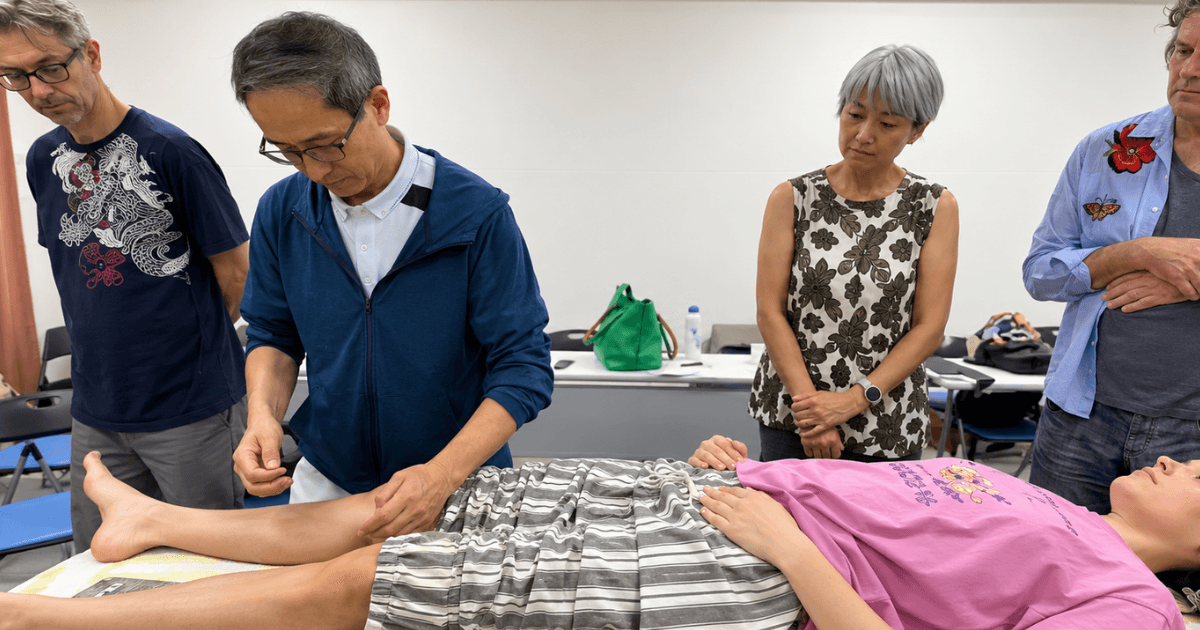
It was her right thumb. During practice, a Sensei noticed Louie’s thumb was sitting slightly away from the skin while needling.
Tiny, right?
But within Toyohari, details such as hand placement, pressure, contact and pulse feedback are closely studied.
Louie was asked to refine that one movement.
Again. And again. And again.
One of her teachers, who has been practising for more than 55 years, spoke about how much can potentially be achieved with a single needle when every small detail around it has been mastered.
More isn’t always better. Sometimes precision is.
Bringing Tokyo Back to Selph
What Louie brought back from Tokyo wasn’t a long list of new techniques – it was a deeper level of precision.
A thumb sitting a few millimetres differently. Feeling subtle changes through the pulse. Seeing how much can be achieved with one carefully placed needle. These were the details her Sensei had spent decades refining, and they’re now feeding directly into the way Louie treats at Selph.
It’s also what makes acupuncture at Selph so varied. Louie brings her Toyohari and Chinese Medicine training, while Joseph works across full-body acupuncture and Chinese herbal medicine, and Hanh offers both full-body and Facial Cosmetic Acupuncture.
Different approaches, different techniques – all tailored to the person in front of them.
Curious to experience it? Explore acupuncture and Chinese medicine at Selph or book with Louie, Joseph or Hanh.