
TMJ Treatment
Jaw pain, clicking, headaches and teeth grinding are more common than most people realise, and very treatable with the right care. Our experienced Chiropractors look beyond the jaw itself to find the real cause of your discomfort, supported where needed by our jaw massage and acupuncture treatments.
New to Selph? Enjoy 10% off your first appointment.
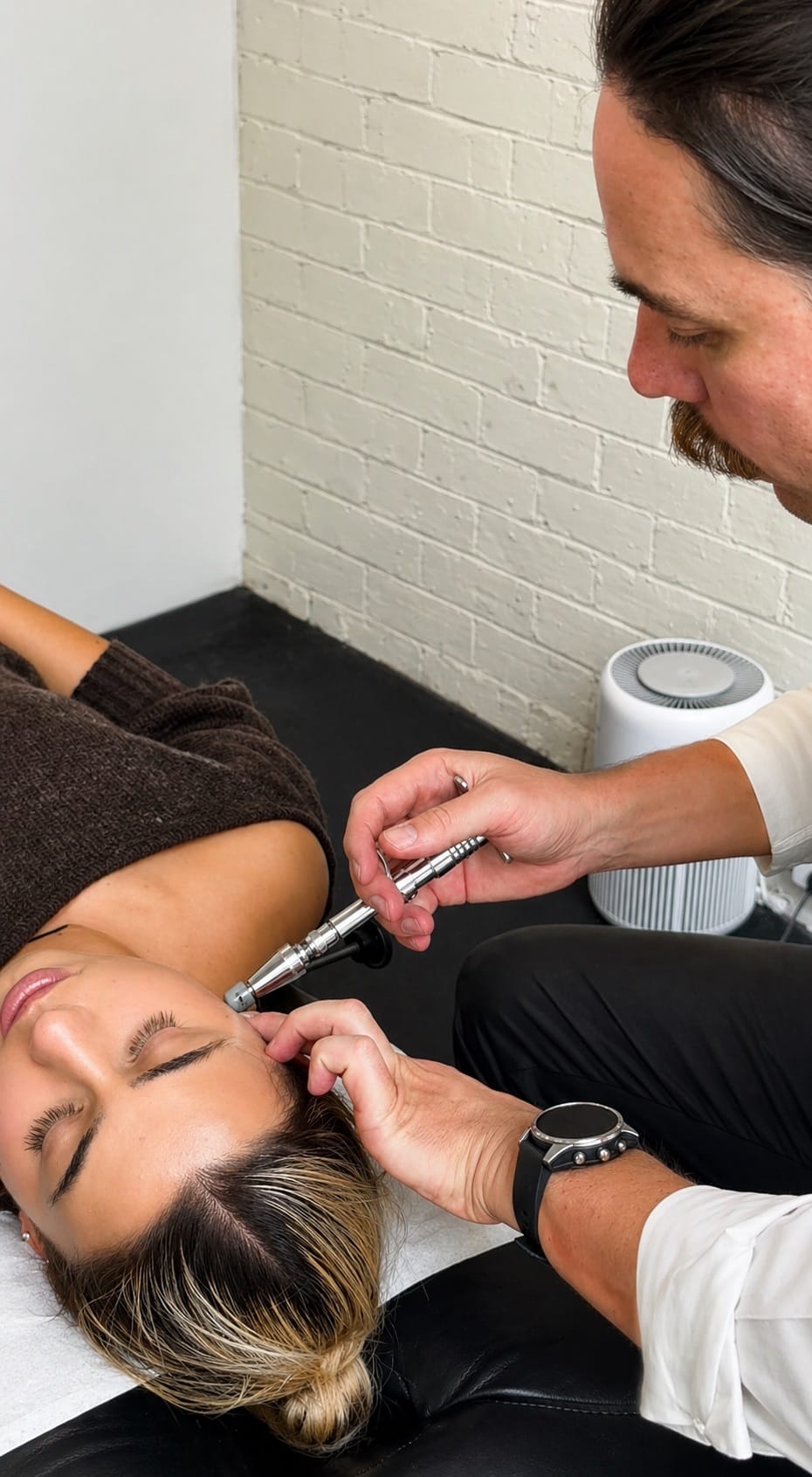
What TMJ actually means.
TMJ refers to the temporomandibular joint, the joint on each side of your head that connects your lower jaw to your skull. It is the joint you feel move every time you talk, chew or yawn. When it, or the muscles that move it, become irritated or overworked, the result is what we call a temporomandibular disorder, or TMD.
It is one of the most common causes of facial pain, affecting around one in ten people at some point and more often women. It can present as a sore or clicking jaw, headaches, tension through the face and neck, or a habit of clenching and grinding that you may not even be aware of.
The reassuring part is that most TMJ pain responds well to conservative, hands-on care. Our role is to find what is driving yours and to relieve it, helping your jaw feel comfortable and move freely again. It is something our practitioners treat every week.
TMJ is rarely just the jaw.
The joint
The jaw joint holds a small cushioning disc that lets it open, close and glide. When the joint or that disc becomes irritated, you may notice clicking, catching, or a jaw that occasionally locks.
The muscles
The muscles that move the jaw do an enormous amount of work. When they are overloaded by clenching or grinding, they tighten and ache, and can refer pain into the teeth, ear, temple and face.
The neck
The upper neck and the jaw share the same nerve pathways into the head, so tension at the top of the neck often refers pain into the jaw. This is why we assess the neck and the jaw together, never one alone.
More often than not, it starts with stress.
When life is busy, so many of us carry that tension in the jaw, clenching through the day and grinding through the night without ever realising. Over time those hard-working muscles tire, the joint and nerves around them begin to complain, and the ache sets in. The habits of a modern day quietly add to the load, and it can build for months before you connect it to your jaw.
Signs of TMJ.
- Jaw pain or tenderness, often worse with chewing
- Clicking, popping or a grating sensation
- A jaw that catches, or briefly locks
- Headaches and migraines
- Aching or tension through the face
- Earache, fullness or ringing in the ears
- Neck and shoulder tension
- Clenching or grinding your teeth
Common triggers.
- Ongoing stress and tension
- Grinding or clenching in your sleep
- Long hours at a desk or screen
- A forward-head posture
- Clenching your jaw through a workout
- Broken or poor sleep
- Habits like nail biting or gum chewing
- A past knock to the jaw or neck
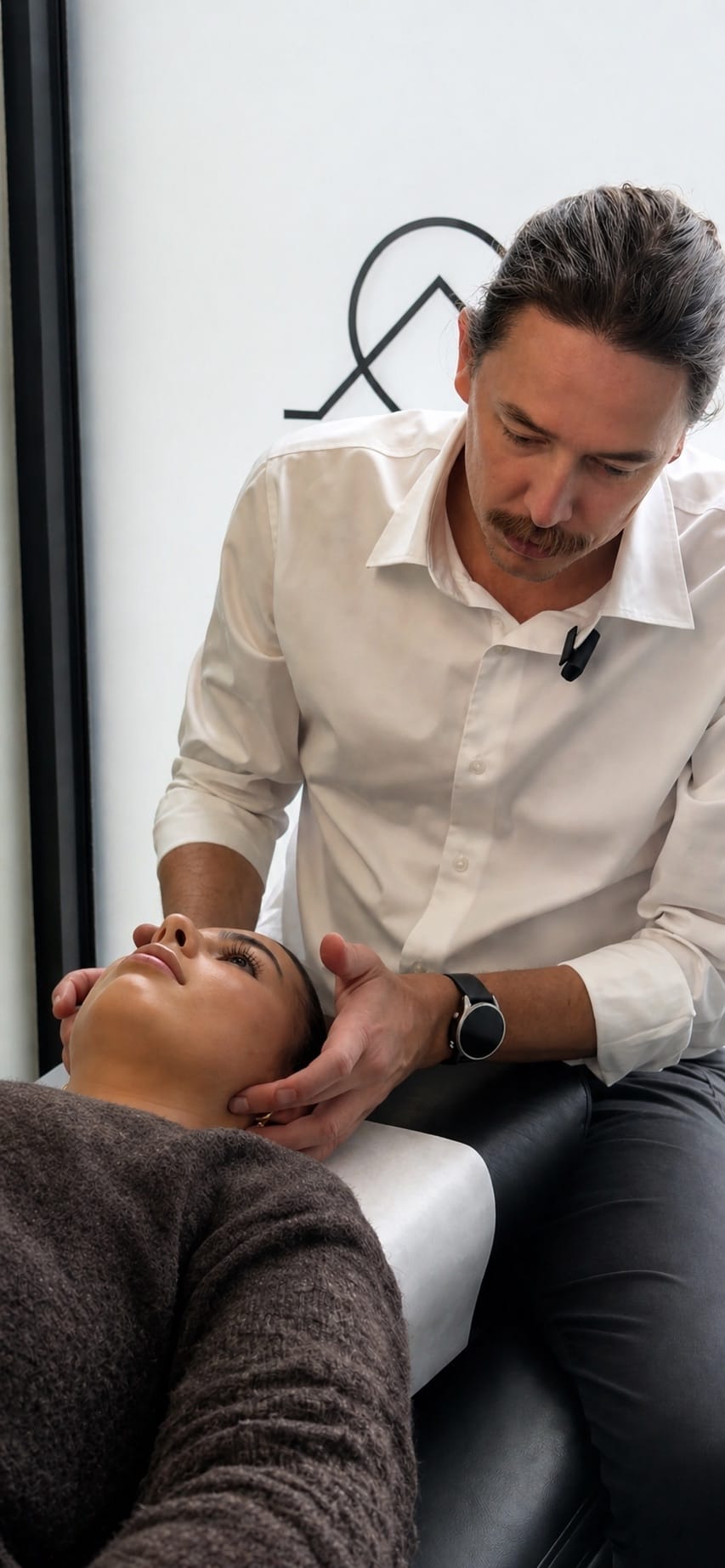
Start with a proper assessment.
Because the jaw, the chewing muscles and the upper neck all work together, our Chiropractors are ideally placed to assess them as one and find where your pain is really coming from. For most jaw problems, it is the most effective place to begin.
Your Chiropractor checks how your jaw moves, feels through the muscles behind so much of the ache, and assesses the upper neck that so often refers pain into the jaw and head. In most cases they will begin treatment in that same visit, easing the joint and muscles with gentle, hands-on care and showing you a few simple things to do at home.
Every one of our Chiropractors treats TMJ, and they will always be honest with you about what to expect and how long it may take.
Book a Chiropractic AssessmentA closer look at jaw treatment.
Treatments that release the muscles behind it.
Because so much of TMJ discomfort is muscular, easing those overworked jaw and neck muscles can bring real relief. Two of our treatments work well alongside your chiropractic care, and your practitioner will help you decide whether one would suit you.
Release the muscles that hold your tension.
This treatment works directly on the muscles behind so much jaw pain, the masseter and temporalis, along with the neck and shoulders that tighten with them. It includes an intra-oral release, working gently inside the mouth to reach the deeper jaw muscles that cannot be treated from the outside.
For anyone who clenches or grinds, it offers a genuine release, easing the pressure and tenderness that build through the day. It sits beautifully alongside your chiropractic care.
Book a Face & Jaw Massage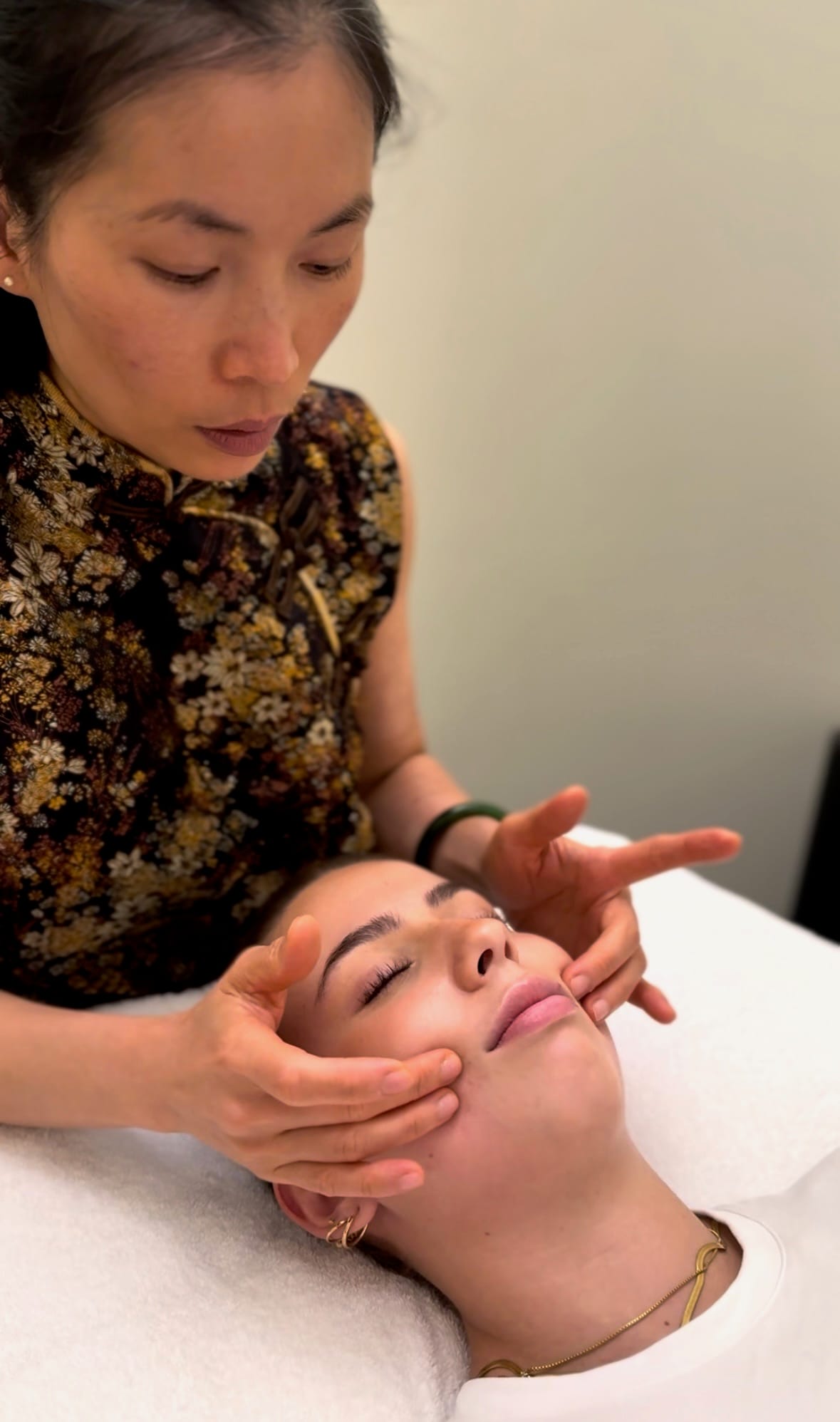
Calm a tight, aching jaw.
For tight, painful jaw muscles, acupuncture and dry needling work on the trigger points in the masseter and temporalis to help the muscle let go, while drawing on the body’s own pain-settling response. Many people find it eases a tense, aching jaw.
It works well as part of your wider treatment rather than on its own, and all of our Acupuncturists treat TMJ and facial pain.
Book an Acupuncture AppointmentCommon questions about TMJ.
Start with any of our Chiropractors. Every one of them assesses and treats TMJ, so you are in good hands whoever you see. If jaw massage or acupuncture would help, they will bring it into your treatment plan.
Your Chiropractor takes the time to understand your symptoms and history, then assesses your jaw, the surrounding muscles and your upper neck to find the cause. In most cases they will begin hands-on treatment in that first visit, and give you a few simple things to do at home to support your recovery.
Not always, but it is worth having checked. Painless clicking can be harmless, though it can also be an early sign that the joint is working harder than it should. A short assessment gives you a clear answer and peace of mind.
Usually not in the way people expect. Current understanding no longer treats an imperfect bite as the main cause of TMJ, so rather than altering your teeth, we focus on settling the joint, the muscles and the neck around it.
It can. A forward-head posture and a tight upper neck often go hand in hand with jaw pain, so easing that neck tension is usually part of helping the jaw feel better.
Most TMJ pain eases with a short course of conservative care, often over a few weeks. Your practitioner will give you a clear, honest sense of what to expect for your situation.
Every one of our Chiropractors treats TMJ.

Dr Evan Sgammotta
Chiropractor & Co-Founder

Dr Gina Martins
Chiropractor & Kinesiologist

Dr Natalie Hope
Chiropractor

Dr Tyler Maher
Chiropractor & NET Practitioner

Dr Michael Schlamp
Chiropractor
As with all treatments at Selph Health Studios, your Chiropractor can discuss your care with any other Selph practitioner you are seeing, so your chiropractic, massage and acupuncture stay cohesive and collaborative across every discipline.
Let’s get your jaw feeling comfortable again.
Book in with one of our experienced Chiropractors for an assessment, and we will find the simplest way back to comfort.